
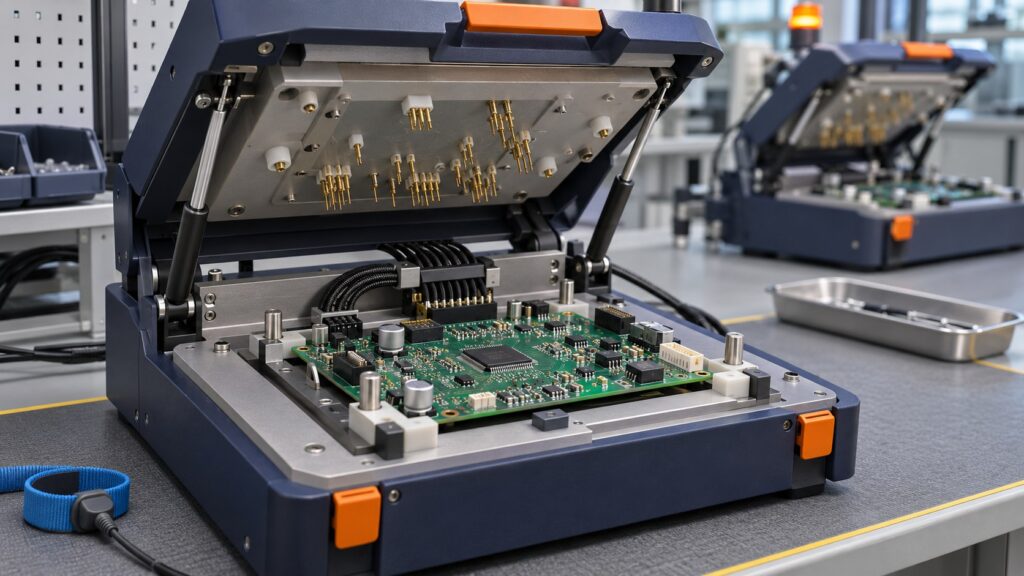
False Failures or Real Defects? How to Investigate Repeated ICT and FCT Failures
A repeated ICT or FCT failure is not automatically a defective board, and a passing retest does not prove that the original failure was false. To distinguish a product problem from a test-system problem, preserve every attempt, compare the measured values and test conditions, and…
Why pass/fail data isn’t enough for root-cause analysis
In this article What the result tells you Which data to connect A worked example What to check next Resources/Manufacturing insights Root cause analysis A pass/fail result tells you whether a unit met a test criterion. To investigate why it failed, connect that result to…
Why Root Cause Analysis Takes Too Long on SMT Lines (And What Actually Helps)
Why Root Cause Analysis Takes Too Long on SMT Lines Most SMT lines today generate large volumes of inspection and test data. AOI systems capture defect locations and images. SPI measures solder paste volume and alignment. ICT and functional test systems log electrical failures. Yet…
Why AOI, SPI, and Test Data Still Don’t Improve SMT FPY (and What Engineers Can Do About It)
SMT Quality • FPY • Root Cause Analysis Why AOI, SPI, and Test Data Still Don’t Improve SMT FPY (and what to do about it) Many SMT teams have more inspection and test data than ever — yet FPY plateaus and investigations stay slow. The…
AI Visual Inspection for SMT Lines: From Detection to Root Cause
Visual inspection is a critical control point in SMT manufacturing. AOI systems can detect thousands of defects per shift, but for process engineers, detection alone is no longer enough. The real challenge starts after a defect is detected. Why did it occur? Is it a…


